Chemometrics & spectroscopy
Explore variation in your spectra, separate overlapping contributions and resolve energy-dependent distributions.
Scientific profile
PhD in chemistry. Founder of DataChem, a scientific and experimental data analysis activity.
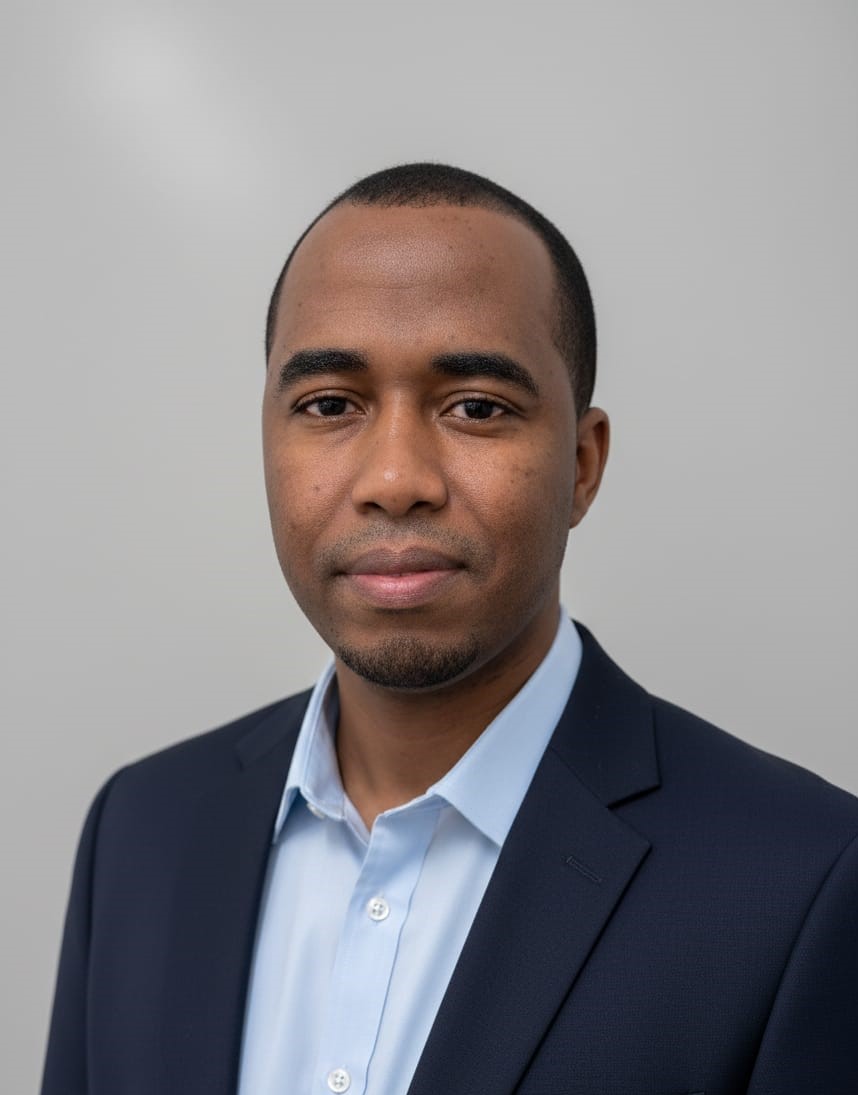
Your contact
PhD in chemistry, specialising in adsorption, spectroscopy and experimental-data analysis. An approach connecting numerical analysis with the measurements behind it.
Explore variation in your spectra, separate overlapping contributions and resolve energy-dependent distributions.
Fit experimental curves and estimate parameters with explicit model assumptions.
Develop or adapt Python tools to your data to run processing steps, visualise results and reproduce analyses.
PhD at the University of Caen Normandy, Laboratoire de Catalyse et Spectrochimie. Research on porous materials, adsorption, diffusion and spectroscopic measurements.
Python, MATLAB and scientific analysis tools support reproducible processing and comparison of numerical results with the physics of the system.
Research foundations
DataChem builds on Abdelhafid Ait Blal’s academic and collaborative research in spectroscopy, adsorption, diffusion, catalysis, kinetics and scientific data analysis.
Combining infrared spectroscopy and gravimetric measurements to distinguish diffusion behaviour within zeolite mixtures.
Combining complementary measurements and inverse methods to investigate transport behaviour.
Investigating CO₂ adsorption through complementary spectroscopic, equilibrium and dynamic measurements.
Connecting spectral analysis with adsorption measurements while preserving the limits of each method.
Investigating levyne zeolite for CO₂ capture and gas separation through adsorption measurements and in situ spectroscopy.
Comparing adsorbent behaviour through complementary equilibrium, dynamic and spectroscopic evidence.
Investigating how silanol environments influence methanol reactivity through in situ and operando spectroscopy.
Resolving overlapping spectral contributions and relating their evolution to reaction conditions.
Combining adsorption measurements and FTIR spectroscopy to investigate hydrate formation in confined pores.
Bringing together experimental observations to support a physically grounded interpretation.